
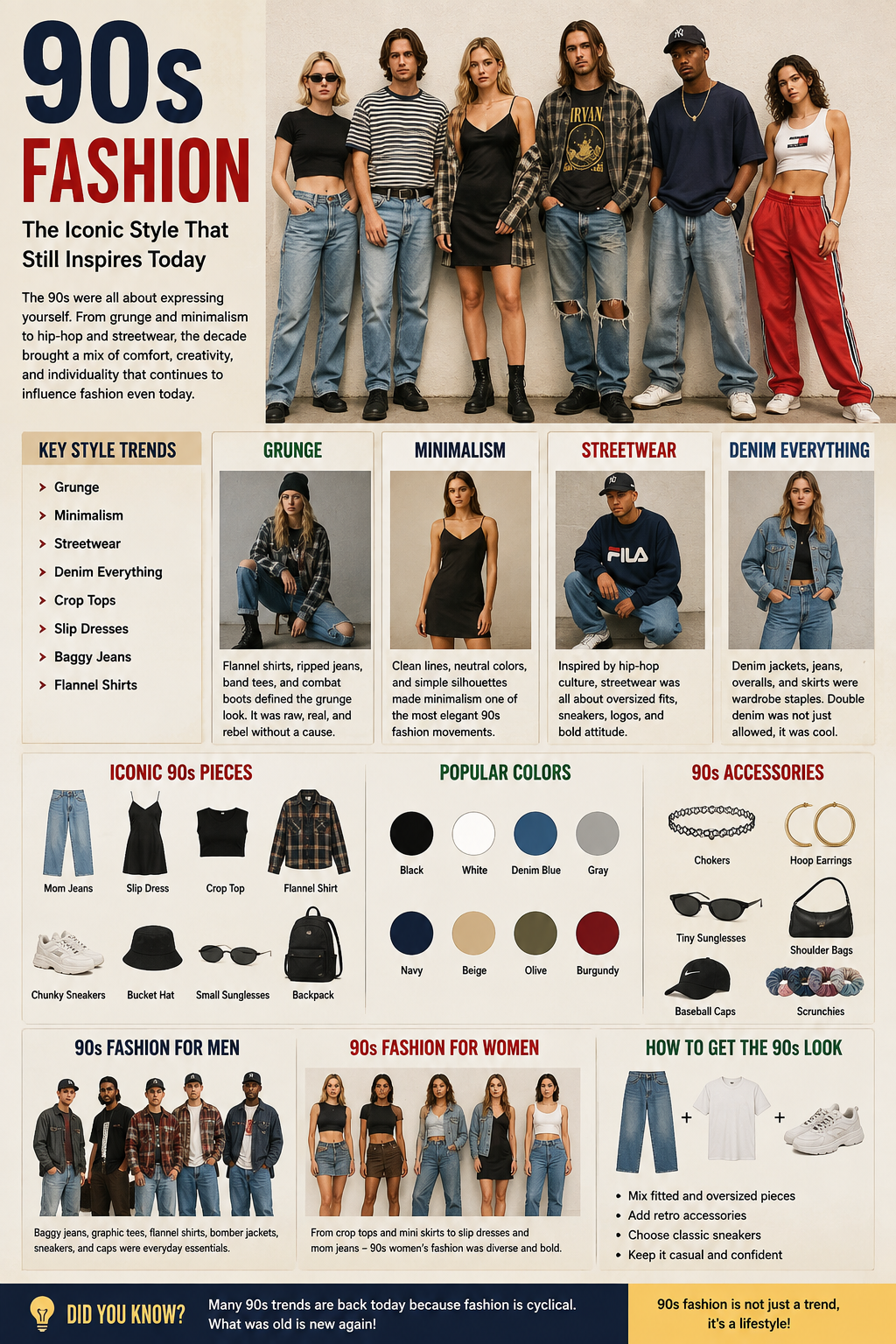
90s fashion has a personality that is difficult to confuse with any other decade. It was relaxed, expressive, sometimes rebellious, and often surprisingly simple. Instead of chasing a single polished aesthetic, people mixed oversized clothing, fitted silhouettes, denim, sportswear, minimal basics, and statement accessories in ways that felt personal. The result was a fashion era that still influences wardrobes decades later.
What makes 90s fashion especially interesting is how many different styles existed at the same time. Grunge fans wore flannel shirts and distressed denim, while minimalists preferred slip dresses and clean tailoring. Hip-hop culture helped popularize oversized clothing and sneakers, while the rise of supermodels brought sleek dresses, crop tops, and sophisticated evening looks into mainstream culture.
Today, the decade continues to inspire designers, celebrities, influencers, and everyday shoppers. Some trends return almost exactly as they appeared, while others are updated with modern cuts and fabrics. Understanding the original spirit of 90s fashion makes it easier to recreate the look without turning an outfit into a costume.
What Made 90s Fashion So Different?
One of the defining qualities of 90s fashion was its willingness to move away from the highly styled appearance associated with previous decades. Clothing often looked effortless. A simple T-shirt, straight-leg jeans, sneakers, and a jacket could create a complete outfit without requiring complicated styling.
The decade also embraced contrast. Tight clothing could be worn with oversized pieces, feminine dresses could be paired with heavy boots, and expensive-looking accessories could appear alongside casual denim. This freedom encouraged people to build outfits around mood and personality rather than following one strict fashion formula.
Another major difference was the growing influence of youth culture. Music, television, film, sports, and emerging streetwear communities all affected what people wore. Fashion was no longer something that came only from runways and traditional magazines. Popular culture became one of the most powerful sources of style inspiration.
The Rise of Minimalist 90s Style
Minimalism became one of the most recognizable sides of 90s fashion. Instead of excessive decoration, minimalist outfits relied on strong silhouettes, neutral colors, and high-quality-looking basics. Black, white, beige, gray, navy, and denim became especially useful for creating clean combinations.
Slip dresses are a perfect example of this approach. A simple satin or satin-like dress with thin straps could look elegant without heavy embellishment. The styling was often intentionally understated, allowing the shape and fabric of the garment to create the visual impact.
Minimalist fashion also influenced everyday clothing. Plain tank tops, fitted T-shirts, straight trousers, simple blazers, and understated shoes became wardrobe essentials. The appeal was practical as much as aesthetic: these pieces could be combined in many different ways and rarely looked overly complicated.
Grunge Fashion and Its Lasting Influence
Grunge was one of the most recognizable youth styles of the decade. Associated strongly with alternative music scenes, it rejected the idea that clothing needed to look perfectly coordinated. Flannel shirts, faded jeans, graphic T-shirts, oversized sweaters, and worn-in boots became central pieces.
Layering played a major role in the grunge aesthetic. A loose flannel could be worn over a band T-shirt, while a simple dress might be combined with boots and an oversized cardigan. The clothing often looked comfortable and lived-in rather than carefully polished.
The influence of grunge has never completely disappeared. Modern fashion frequently returns to distressed denim, plaid shirts, chunky boots, and oversized layers. The contemporary version may use cleaner fabrics and more deliberate proportions, but the basic attitude remains recognizable: comfortable clothes can still make a strong style statement.
Denim Was Everywhere
It is almost impossible to discuss 90s fashion without talking about denim. Jeans were among the decade’s most important wardrobe staples, and the preferred styles were generally less restrictive than some of the extremely fitted designs that became popular later.
Straight-leg, relaxed, and loose-fitting jeans were particularly important. High-waisted denim also appeared in many wardrobes, while denim jackets offered another easy way to add texture to an outfit. Double-denim combinations were not unusual and could be styled casually with simple shirts and sneakers.
Denim was also used beyond trousers. Denim skirts, overalls, shorts, jackets, and dresses helped make the fabric one of the most versatile materials of the decade. Modern fashion continues to borrow this idea, although today’s denim often combines 90s-inspired shapes with contemporary fabrics and tailoring.
90s Slip Dresses and Feminine Looks
The slip dress became one of the signature garments of the decade. Inspired by lingerie-like shapes, it featured thin straps, a relatively simple silhouette, and fabrics that created a soft, fluid appearance. It could be worn casually or styled for more formal occasions.
One reason the slip dress worked so well was its versatility. A minimalist version could stand alone with delicate accessories, while a more casual outfit could layer it over a T-shirt. Boots, sneakers, sandals, or simple heels could completely change the personality of the same dress.
The trend has remained popular because it is easy to adapt. A modern interpretation might use a slightly longer hem, a more structured fabric, or contemporary footwear. The basic principle remains the same: keep the silhouette simple and let styling create the personality.
Crop Tops and Fitted Tops
Crop tops became an important part of youthful 90s fashion. They appeared in casual outfits, dancewear-inspired looks, beachwear, and evening combinations. Some were extremely simple, while others featured prints, logos, or sporty details.
The contrast between fitted tops and relaxed bottoms was particularly characteristic. A small crop top could be combined with loose jeans or wide trousers, creating a balanced silhouette. This proportion-based styling remains useful today because it prevents an oversized outfit from becoming shapeless.
Modern versions of the crop top often come with more choices in length and fit. Someone who wants a subtle reference to 90s fashion can choose a slightly cropped fitted T-shirt rather than a very short top. The influence can be present without copying the decade literally.
Oversized Clothing and Relaxed Silhouettes
Oversized clothing became a defining feature of many 90s wardrobes. Large T-shirts, loose sweatshirts, baggy jeans, roomy jackets, and oversized shirts reflected the decade’s preference for comfort and casual confidence.
The popularity of oversized pieces was especially strong in streetwear and hip-hop-inspired fashion. Clothing became a way to communicate attitude and cultural identity, with proportions playing a major role. A deliberately oversized outfit could feel powerful rather than careless when the pieces were chosen intentionally.
The modern revival of oversized fashion owes a lot to this period. However, proportion is still important. Wearing one oversized item alongside something more fitted often creates a cleaner silhouette. The goal is to make relaxed clothing look intentional rather than simply too large.
90s Streetwear
Streetwear developed into a major cultural force during the 90s. Sportswear, graphic clothing, sneakers, denim, and oversized silhouettes became part of everyday style rather than being restricted to athletic activities.
Logos and graphics were important, but the broader idea was even more influential: casual clothing could become fashion. Sweatshirts, tracksuits, baseball caps, sneakers, and loose trousers could be combined into outfits that felt both comfortable and expressive.
Today’s streetwear is much more commercially developed, but its 90s roots are easy to recognize. Many contemporary outfits still depend on the same formula of relaxed proportions, statement sneakers, graphic tops, and practical outerwear.
Sneakers Became a Fashion Statement
Sneakers were already popular before the 90s, but the decade helped strengthen their position as everyday fashion essentials. Athletic footwear moved beyond gyms and sports fields and became an important part of casual outfits.
Chunky sneakers, basketball-inspired shoes, running silhouettes, and classic canvas styles all found their audiences. Sneakers could be worn with jeans, shorts, skirts, dresses, and oversized clothing, making them one of the decade’s most adaptable footwear choices.
The continued popularity of retro sneakers demonstrates just how strong this influence remains. Modern brands regularly revisit older silhouettes or create new shoes inspired by vintage designs. Pairing classic-looking sneakers with relaxed denim and a simple top remains one of the easiest ways to introduce a 90s touch.
Flannel Shirts and Layering
Flannel shirts became closely connected with alternative and grunge fashion, but their usefulness extended far beyond that scene. A plaid button-up was affordable, practical, comfortable, and easy to layer, making it a natural choice for casual wardrobes.
Wearing a flannel open over a T-shirt created a relaxed outfit with very little effort. It could also be tied around the waist, layered beneath a jacket, or worn buttoned up with jeans. The flexibility made it one of those pieces that could evolve throughout the day.
For a modern wardrobe, the best approach is to avoid excessive styling. One plaid shirt, simple denim, and understated footwear can communicate the 90s influence without making the outfit feel like a themed costume.
90s Jackets That Defined the Era
Outerwear played a major role in 90s fashion. Denim jackets were perhaps the most universal option, but leather jackets, bomber jackets, windbreakers, and oversized blazers also appeared across different style communities.
Leather jackets offered a tougher edge and worked especially well with jeans, boots, and simple T-shirts. Bomber jackets brought a sporty feel, while oversized blazers supported the decade’s growing interest in relaxed tailoring.
Today, vintage-inspired outerwear remains one of the easiest ways to recreate the decade. A slightly loose denim jacket or relaxed leather jacket can transform a modern outfit immediately. The key is choosing a shape that feels comfortably oversized rather than dramatically huge.
The Importance of 90s Accessories
Accessories could completely change a simple outfit. Chokers, small sunglasses, hoop earrings, baseball caps, backpacks, shoulder bags, and minimalist jewelry all contributed to different versions of 90s fashion.
Chokers were particularly recognizable, appearing in both casual and dressier outfits. Small shoulder bags also became popular because they were compact while still adding a fashionable finishing touch. Sunglasses often featured narrow or oval shapes, creating a distinctive visual connection with the decade.
Accessories are perhaps the easiest way to experiment with a retro trend. Someone who does not want to wear head-to-toe vintage-inspired clothing can add a small shoulder bag, simple hoops, or retro sunglasses to an otherwise contemporary outfit.
90s Fashion for Men
Men’s fashion during the decade was equally diverse. Some men preferred relaxed jeans and graphic T-shirts, while others adopted minimal tailoring, sportswear, or alternative styles. Oversized clothing was especially influential, particularly in streetwear and hip-hop culture.
Baggy jeans, hoodies, sneakers, bomber jackets, flannel shirts, and baseball caps were common components of casual looks. At the same time, minimalist fashion introduced cleaner shirts, trousers, leather jackets, and understated footwear.
The most useful lesson from 90s men’s fashion is the importance of relaxed proportions. A loose pair of jeans with a fitted or regular T-shirt can look effortlessly retro, while an oversized sweatshirt with straight trousers creates a more streetwear-oriented appearance.
90s Fashion for Women
Women’s fashion in the 90s moved between dramatically different aesthetics. Minimalist dresses existed alongside grunge outfits, sporty looks, glamorous eveningwear, and casual denim combinations. This diversity is one reason the decade continues to offer so much inspiration.
Popular combinations included fitted tops with relaxed jeans, slip dresses with boots, denim skirts with simple T-shirts, and oversized jackets layered over more fitted clothing. The styling often depended on contrast rather than matching every element perfectly.
The most wearable modern interpretation is to choose one or two recognizable elements. A slip dress with sneakers, straight-leg jeans with a cropped T-shirt, or a denim jacket over a simple dress can capture the decade’s influence while still looking current.
The Influence of Music on 90s Fashion
Music was one of the strongest forces shaping 90s fashion. Different genres developed distinctive visual identities, and fans often adopted clothing associated with the artists and communities they followed.
Grunge brought plaid shirts, worn denim, boots, and layered clothing into mainstream visibility. Hip-hop helped popularize oversized silhouettes, athletic footwear, tracksuits, graphic clothing, and bold accessories. Pop music introduced colorful, youthful, and often playful styling.
This relationship between music and fashion remains important today. Artists continue to influence trends, but the 90s demonstrated how powerful a cultural connection could become when clothing, music, and identity were closely connected.
Television and Movies Changed Everyday Style
Television shows and movies had a huge impact on what people considered fashionable. Characters became style references, and viewers often wanted to recreate recognizable outfits using accessible pieces.
Casual wardrobes were particularly affected. Simple jeans, fitted tops, cardigans, mini skirts, jackets, and dresses could suddenly become desirable because audiences saw them repeatedly on popular characters. The effect was different from traditional fashion advertising because viewers connected the clothes with personalities and stories.
That influence is still visible in today’s nostalgia-driven fashion. When older television shows and films become popular again, their wardrobes often receive renewed attention. The result is another cycle in which 90s-inspired pieces move from archive imagery back into contemporary shopping and styling.
How to Recreate 90s Fashion Today
The easiest way to recreate 90s fashion is not to copy an entire outfit from head to toe. Instead, start with a modern wardrobe and introduce a few recognizable elements. Straight-leg jeans, a plain fitted T-shirt, retro sneakers, and a denim jacket can already create a convincing reference.
For a more feminine look, try a slip-style dress with sneakers or boots, then add a small shoulder bag and simple jewelry. For a grunge-inspired outfit, relaxed jeans, a vintage-looking T-shirt, an open plaid shirt, and boots can work well.
The important thing is balance. If every piece screams “retro,” the result can look more like a costume than everyday fashion. Mixing one or two 90s-inspired items with modern basics usually creates a more natural and sophisticated result.
90s Fashion Color Palettes
Color choices varied significantly throughout the decade. Minimalist styles often depended on black, white, gray, beige, and muted shades, while sportswear and youth fashion could be much brighter.
Earth tones were especially useful in grunge-inspired wardrobes. Olive, brown, burgundy, charcoal, and faded blue worked naturally with denim and plaid. Meanwhile, brighter colors appeared in athletic clothing, pop-inspired outfits, and statement accessories.
For someone building a modern 90s-inspired wardrobe, neutral colors provide the easiest starting point. Once the basic pieces are established, brighter accessories or patterned garments can be introduced for additional personality.
The Return of Baggy Jeans
Baggy jeans have experienced a major revival, and their connection to 90s fashion is obvious. Unlike extremely narrow denim silhouettes, relaxed jeans prioritize movement and comfort while creating a distinctive shape.
The styling possibilities are broad. Baggy jeans can be paired with a fitted crop top for contrast, an oversized sweatshirt for a streetwear aesthetic, or a simple tucked-in T-shirt for something more understated.
The modern version often has more carefully considered proportions than vintage examples. A slightly structured baggy jean can provide the same relaxed appearance while remaining easy to style with contemporary footwear and outerwear.
Why 90s Fashion Keeps Coming Back
Fashion is cyclical, but 90s fashion has shown unusual staying power. One reason is that the decade offered a wide range of aesthetics rather than one dominant look. Almost anyone can find something appealing within it.
Another reason is nostalgia. People who grew up during the 90s may associate the clothing with music, television, family memories, school, or early experiences with popular culture. Younger generations can discover the same styles as something visually fresh and different from recent fashion trends.
The decade also produced many practical wardrobe staples. Straight-leg denim, simple T-shirts, leather jackets, sneakers, slip dresses, and oversized shirts are not difficult to wear. Their versatility makes them useful even when the broader trend cycle changes.
Building a 90s-Inspired Capsule Wardrobe
A small collection of carefully chosen pieces can create dozens of 90s-inspired outfits. Start with a pair of straight or relaxed jeans, a plain white or black T-shirt, a simple tank top, and a denim or leather jacket.
Next, add one plaid shirt, a casual sweatshirt, retro sneakers, and a simple dress. Accessories such as a shoulder bag, sunglasses, and understated jewelry can provide the finishing details.
The goal of a capsule wardrobe is not to own every trend. Instead, choose versatile items that can be mixed together. This approach captures one of the best lessons from 90s fashion: great style does not necessarily require a huge wardrobe.
Common Mistakes When Wearing 90s Fashion
One common mistake is trying to recreate the decade too literally. Wearing every recognizable 90s trend at the same time can make an outfit feel theatrical. A better approach is to select a clear reference point and keep the rest simple.
Another mistake is ignoring fit. Oversized clothing should look intentional, while fitted pieces should still allow comfortable movement. The relationship between different proportions is often more important than the individual garments.
Finally, avoid assuming that every 90s trend works equally well for everyone. Personal style, body proportions, comfort, climate, and lifestyle all matter. The best retro-inspired outfit is one that feels natural to the person wearing it.
Sustainable Ways to Explore 90s Fashion
Secondhand shopping is an excellent way to explore 90s-inspired fashion. Vintage and resale stores can offer denim, jackets, shirts, bags, and accessories that have the right textures and proportions without requiring newly manufactured clothing.
Another useful strategy is to shop your existing wardrobe first. Many people already own pieces that can create a 90s-inspired outfit when styled differently. An old denim jacket, plain T-shirt, relaxed trousers, or pair of sneakers may be enough.
Reusing clothing also encourages a more thoughtful approach to trends. Instead of buying an entirely new wardrobe every time a decade becomes popular, you can introduce small changes and keep wearing pieces long after the trend cycle moves on.
How 90s Fashion Influences Modern Designers
The influence of the decade can be seen in contemporary silhouettes, denim collections, footwear, outerwear, and styling campaigns. Designers frequently reinterpret older ideas rather than reproducing them exactly.
Modern interpretations may use more advanced fabrics, cleaner construction, or updated proportions. A classic slip dress might receive a contemporary cut, while relaxed jeans may be designed with modern tailoring and different denim weights.
This process explains why fashion revivals rarely look identical to the original era. The reference remains recognizable, but the execution changes according to modern tastes, technology, and cultural attitudes.
A Practical 90s Outfit Guide
For a casual everyday outfit, start with straight-leg jeans, a simple fitted T-shirt, sneakers, and a denim jacket. This combination is easy to wear and can be adjusted for different seasons.
For a grunge-inspired look, choose relaxed dark denim, a graphic T-shirt, an open plaid shirt, and sturdy boots. Keeping the accessories simple prevents the outfit from becoming overly themed.
For a minimalist look, try a simple slip-style dress, understated footwear, a small shoulder bag, and delicate jewelry. The clean silhouette allows the outfit to reference the decade without looking outdated.
| 90s Style | Key Clothing Pieces | Easy Modern Update |
|---|---|---|
| Minimalist | Slip dress, fitted top, simple trousers | Neutral colors and clean accessories |
| Grunge | Flannel, distressed denim, boots | Use one vintage-inspired layer |
| Streetwear | Baggy jeans, sweatshirt, sneakers | Balance oversized and fitted pieces |
| Sporty | Tracksuit, sneakers, cap | Keep the palette simple |
| Denim-focused | Jeans, denim jacket, denim skirt | Mix different denim washes |
| Feminine | Slip dress, mini skirt, fitted top | Add contemporary footwear |
| Casual | T-shirt, jeans, sneakers | Choose modern relaxed proportions |
Is 90s Fashion Still Relevant?
Absolutely. The strongest evidence is how often 90s-inspired silhouettes return to mainstream fashion. Relaxed denim, minimalist dresses, sneakers, oversized jackets, crop tops, and casual layering remain easy to find and easy to wear.
However, relevance does not mean every historical trend needs to return unchanged. Some styles are better treated as inspiration. Modern fabrics, improved construction, and updated proportions can make familiar ideas more comfortable and practical.
The enduring appeal comes from versatility. Many 90s staples are not dependent on a specific trend cycle. A good pair of jeans, a simple T-shirt, a leather jacket, or a comfortable sneaker can remain useful regardless of what is happening on fashion runways.
Why People Love 90s Fashion
People often describe 90s fashion as effortless, but that word deserves some explanation. The clothing was not necessarily plain; rather, the styling frequently appeared less controlled than the highly coordinated looks associated with some other decades.
There was also a sense of individuality. Someone could borrow from grunge, sportswear, minimalism, hip-hop, or pop culture without committing completely to one identity. That flexibility made the decade especially creative.
Most importantly, 90s fashion provides clothing that feels wearable. Even when the original trends were bold, many of the underlying pieces were practical. That combination of personality and everyday usefulness is a major reason the decade continues to influence modern wardrobes.
Final Thoughts on 90s Fashion
90s fashion was much more than baggy jeans, flannel shirts, and slip dresses. It was a decade defined by cultural diversity, relaxed styling, changing silhouettes, and the growing influence of music, television, streetwear, and youth culture. Different groups interpreted fashion in completely different ways, creating a period that remains remarkably rich for inspiration. The best way to bring the decade into a modern wardrobe is to focus on its principles rather than simply copying old photographs. Look for relaxed proportions, simple staples, thoughtful layering, comfortable footwear, and a mixture of fitted and oversized pieces. Then add a few recognizable details such as denim, plaid, retro sneakers, or a small shoulder bag.
Ultimately, the appeal of 90s fashion comes from its freedom. It showed that an outfit could be stylish without appearing overly complicated. Whether you prefer minimalist dresses, grunge layers, streetwear, classic denim, or sporty clothing, there is a version of the decade that can work for you. That adaptability is exactly why its influence continues to return, generation after generation.
Frequently Asked Questions About 90s Fashion
What is 90s fashion?
90s fashion refers to the clothing styles, silhouettes, accessories, and cultural influences associated with the 1990s. It included minimalist outfits, grunge, streetwear, oversized clothing, denim, slip dresses, crop tops, sneakers, and many other styles.
What were the most popular 90s fashion trends?
Some of the best-known trends included straight and baggy jeans, slip dresses, flannel shirts, crop tops, oversized T-shirts, denim jackets, leather jackets, sneakers, chokers, small shoulder bags, and sporty clothing.
How can I dress in 90s fashion without looking outdated?
Choose one or two 90s-inspired pieces and combine them with contemporary basics. For example, relaxed jeans with a fitted T-shirt and modern sneakers can create a subtle retro look without appearing like a costume.
Is 90s fashion coming back?
Yes. Many 90s-inspired trends have returned repeatedly, particularly relaxed denim, oversized silhouettes, minimalist dresses, sneakers, crop tops, and vintage-style accessories. Contemporary versions are often adjusted to fit modern preferences.
What shoes were popular in 90s fashion?
Sneakers were extremely important, along with chunky footwear, boots, simple sandals, and other casual styles. The exact choice depended heavily on the particular fashion scene and outfit.
Why is 90s fashion still popular?
Its popularity comes from a combination of nostalgia, cultural influence, comfortable silhouettes, and versatile wardrobe staples. Many pieces associated with the decade are easy to incorporate into contemporary outfits.
What colors are associated with 90s fashion?
There was no single 90s color palette. Minimalist styles often used black, white, gray, beige, and muted tones, while sportswear and youth fashion frequently included brighter colors. Earth tones were also common in grunge-inspired looks.
YOU MAY HAVE MISSED
