
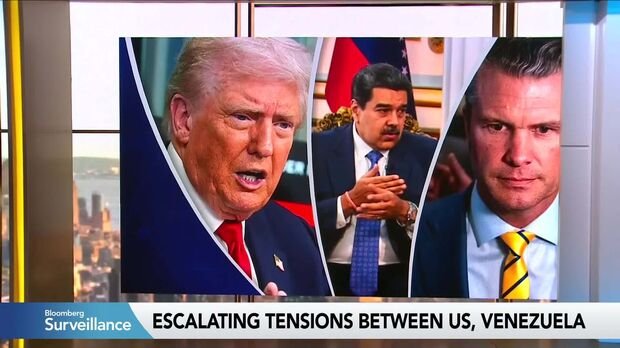
The latest trump venezuela news is drawing international attention because the relationship between Washington and Caracas has changed dramatically in 2026. What was once defined mainly by sanctions, political confrontation, and threats has developed into a far more direct American role in Venezuela’s political, security, and energy affairs. The biggest developments now involve oil, diplomatic relations, elections, and the future direction of the Venezuelan government.
President Donald Trump has made Venezuela an important part of his broader foreign-policy strategy in the Western Hemisphere. After the dramatic U.S. military operation that resulted in the capture of Nicolás Maduro in January, Washington and Caracas began moving toward a new relationship. The United States later restored diplomatic and consular relations with Venezuela, while the Trump administration increasingly focused on rebuilding the country’s damaged oil industry and limiting the influence of rival powers.
The story is still developing, and that makes it important to separate confirmed developments from political claims and predictions. Recent reports say the United States has reached a major agreement connected to Venezuelan oil fields, while Trump has also said Venezuela is not yet ready for elections. At the same time, questions are growing about Venezuelan sovereignty, the role of the interim government, and whether economic cooperation will actually lead to a democratic transition.
Why Trump Venezuela News Matters Right Now
The importance of trump venezuela news goes far beyond the two countries themselves. Venezuela possesses some of the world’s largest oil reserves, making its energy sector strategically significant for the United States, Europe, China, Russia, and other major economic powers. Any major change in who controls investment, production, transportation, and sales can therefore have consequences well beyond Caracas.
For years, Venezuela’s economy has struggled with declining oil production, political instability, international sanctions, weak infrastructure, and a shortage of investment. The country’s petroleum industry remains the central pillar of its economy, but rebuilding production requires enormous amounts of money, technology, skilled workers, and political stability. The Trump administration is now presenting American involvement as a way to restart that industry and turn Venezuela into a stronger energy producer.
There is also a major geopolitical dimension. Washington has long been concerned about Russian and Chinese influence in Venezuela. Greater American involvement could reduce the space available to those countries while giving the United States greater access to Venezuelan energy resources. At the same time, critics worry that economic influence could become political control. That debate is likely to remain at the center of the Venezuela story for months to come.
The 2026 Turning Point in U.S.-Venezuela Relations
One of the biggest turning points came in January 2026, when the United States carried out a military operation in Venezuela and Trump announced that Nicolás Maduro had been captured. The U.S. government said Maduro would face drug-related charges in the United States. The operation represented an extraordinary escalation compared with the sanctions and diplomatic pressure that had characterized earlier American policy.
The immediate aftermath was uncertain. Venezuela had to deal with the removal of its longtime leader while Washington attempted to shape a new political and economic relationship with Caracas. Rather than maintaining a purely confrontational approach, the Trump administration began discussions with Venezuelan authorities and explored cooperation involving energy, security, trade, and diplomacy.
That shift became clearer as 2026 progressed. The United States and Venezuela agreed to re-establish diplomatic and consular relations in March, and the U.S. Embassy in Caracas subsequently reopened. These developments marked a remarkable change from the diplomatic breakdown of previous years. The reopening of formal channels suggested that Washington wanted an ongoing presence in Venezuela rather than simply relying on pressure from outside the country.
Trump’s Major Venezuela Oil Strategy
Oil is at the heart of the newest phase of trump venezuela news. In late August, Trump announced an agreement that he described as a massive opportunity involving Venezuela’s oil reserves. The White House later provided additional details, explaining that the arrangement involves North American Blue Energy Partners, or NABEP, a company controlled by Venezuelan businessman Alejandro Betancourt.
Under the agreement, a newly created joint venture would receive long-term rights involving 17 Venezuelan oil fields. Reports put the associated reserves at approximately 65 billion barrels. The Pentagon’s Office of Strategic Capital is expected to hold a 35% position in the venture, while the United States is also entitled to receive a portion of production at cost. The administration has promoted the arrangement as an opportunity to rebuild Venezuela’s oil sector without requiring direct taxpayer funding.
The scale of the agreement explains why it has generated so much attention. Venezuela has enormous oil resources, but having reserves underground is very different from producing and selling oil efficiently. Years of underinvestment and deteriorating infrastructure have reduced production capacity. The Trump administration believes American investment and management can help reverse that decline, although independent analysts have warned that rebuilding the industry could take years and require extremely large amounts of capital.
What the 65 Billion-Barrel Deal Could Mean
The reported 65 billion barrels connected to the new arrangement sound enormous, but reserves should not be confused with immediately available production. Venezuela’s oil is often heavy and technically challenging to process. Producing it at commercial scale requires drilling, pipelines, upgrading facilities, electricity, transportation, maintenance, and access to refineries capable of handling the crude.
Recent reporting indicates that Venezuela’s current production is around 1 to 1.2 million barrels per day, although estimates vary. The Trump administration sees substantial room for growth. U.S. officials have suggested that additional investment and agreements with international energy companies could eventually increase production significantly.
The economic impact could therefore be substantial if the plans succeed. Higher production could generate more government revenue, create jobs, improve infrastructure, and increase Venezuela’s ability to pay debts. For the United States, increased Venezuelan oil production could strengthen energy security and provide an additional source of crude in the Western Hemisphere. But none of those benefits are guaranteed. Venezuela still faces major legal, financial, technical, and political obstacles.
Why the Venezuela Oil Agreement Is Controversial
The new oil arrangement has attracted criticism from several directions. Some critics question the decision to award extremely long-term rights without a conventional competitive process. Others argue that the agreement gives the United States an unusually powerful position inside Venezuela’s most important industry.
The reported structure is particularly noteworthy because Washington is not simply buying Venezuelan crude on the open market. The United States is taking an equity position in an oil venture and obtaining other rights connected to production. Reuters reported that U.S. officials structured the 35% position using warrants designed to protect Washington’s stake against dilution if additional capital is raised.
Supporters see the arrangement differently. They argue that Venezuela needs outside capital and expertise, and that American participation could help restore an industry that has been damaged by years of economic and political turmoil. The Trump administration also argues that greater U.S. involvement can create a more stable and reliable energy relationship. The disagreement is therefore not simply about oil. It is about sovereignty, investment, political legitimacy, and who will benefit from Venezuela’s natural resources.
Trump Says Venezuela Is Not Ready for Elections
Another major part of the latest trump venezuela news concerns elections. On September 2, Trump said Venezuela was not yet ready to hold elections, arguing that the country needed more time. That statement immediately raised questions about the timeline for a democratic transition after Maduro’s removal.
The issue is sensitive because elections have long been a central demand of Venezuelan opposition groups and many governments that criticized Maduro’s rule. If Washington says elections must wait, critics may interpret that as evidence that the United States is prioritizing stability and economic arrangements over a rapid return to electoral politics.
At the same time, holding an election is not simply a matter of setting a date. A credible vote requires functioning institutions, electoral authorities, political parties, security guarantees, voter registration, media access, and confidence that competing candidates can campaign freely. Venezuela’s political system has experienced years of institutional conflict, so organizing a widely accepted election would be a complicated undertaking even without American involvement.
The Role of Delcy Rodríguez
Delcy Rodríguez has become a central figure in the post-Maduro political landscape. After the January crisis, she emerged as Venezuela’s interim leader and became an important counterpart for the Trump administration. Her government has participated in negotiations with Washington covering oil, diplomacy, security, and economic matters.
The relationship is unusual because Washington’s approach has combined pressure with cooperation. The United States has pursued major strategic interests while simultaneously working with the Venezuelan authorities. This has created a complicated political environment in which economic agreements and diplomatic recognition are developing faster than some aspects of the democratic transition.
Supporters of the current approach argue that working with the government that actually controls Venezuelan institutions is necessary to prevent chaos and restart the economy. Critics argue that cooperation could strengthen an unelected government and reduce pressure for political reform. That disagreement is likely to remain one of the defining questions in future trump venezuela news coverage.
U.S. Military Action and Security Concerns
Energy is not the only issue driving the relationship. Security operations have also become part of the story. On September 2, Trump announced that U.S. forces had struck a boat that he said was involved in trafficking cocaine to the United States and was connected to Tren de Aragua. The operation reportedly killed 11 people and was conducted without Coast Guard involvement, relying instead on the Navy.
The incident reflects the Trump administration’s broader emphasis on combating drug trafficking and organized crime. The administration has increasingly linked Venezuelan criminal networks with wider U.S. national-security concerns. This has made the Caribbean and Venezuela important areas of American military and law-enforcement activity.
However, military action outside traditional law-enforcement frameworks raises serious questions about legal authority, evidence, proportionality, and sovereignty. Supporters say aggressive action is necessary to confront dangerous trafficking networks. Critics argue that military force against suspected criminal activity requires careful legal scrutiny and transparent evidence. These questions will remain important as the United States expands its security role in the region.
How Venezuela’s Oil Industry Could Change
Venezuela’s oil industry has enormous potential, but rebuilding it will not happen overnight. Production facilities have suffered from years of insufficient maintenance and investment. Oil fields require modern equipment, reliable electricity, transportation systems, trained personnel, and substantial financial backing.
International energy companies may be interested in returning if they believe the political and legal environment has become more predictable. Reports have already pointed to agreements involving companies such as Chevron and Eni, alongside other energy-sector arrangements. U.S. Energy Secretary Chris Wright has also been involved in discussions concerning Venezuela’s oil and electricity infrastructure.
Still, analysts remain cautious. One recent assessment argued that Venezuela could need roughly $140 billion to $210 billion in investment to achieve a major long-term increase in oil output. Even a successful investment program could therefore require many years. The immediate headlines may focus on huge reserve numbers, but the real test will be whether production actually rises consistently.
What the Oil Deal Means for Ordinary Venezuelans
For Venezuelans, the most important question is not how many barrels are underground. It is whether greater oil investment improves everyday life. Venezuela has experienced years of economic hardship, inflation, migration, shortages, deteriorating public services, and declining purchasing power. Oil wealth has not automatically translated into broad prosperity.
A successful recovery could change that situation. Increased production could provide more government revenue and support investment in electricity, transportation, healthcare, education, and other public services. New oil projects could also create employment directly and indirectly, especially if suppliers and local businesses become part of the expanding energy economy.
But there is also a risk that large energy deals could primarily benefit governments, corporations, and politically connected individuals. That is why transparency and accountability will be crucial. Venezuelans will likely judge the Trump-backed strategy by visible improvements in wages, services, infrastructure, and economic opportunity rather than by the size of agreements announced in Washington or Caracas.
The Debate Over American Influence in Venezuela
The latest developments have revived an old debate about the role of the United States in Latin America. Washington has historically exercised considerable political and economic influence across the region, while Latin American governments have often emphasized national sovereignty and independence from outside powers.
The current Venezuela strategy is especially sensitive because the United States used military force to remove Maduro and is now deeply involved in the country’s political and economic reconstruction. Critics describe this as excessive interference, while supporters describe it as necessary leadership following the collapse of the previous political order.
The oil agreement has intensified that argument. A century-long relationship involving major Venezuelan reserves naturally raises questions about how much control Caracas retains over its resources. The Trump administration argues that the arrangement can revive Venezuela’s economy and strengthen American energy security. Opponents fear that Venezuela could become overly dependent on Washington.
China, Russia, and Venezuela’s Geopolitical Future
Venezuela has historically maintained relationships with countries including Russia and China, both of which have invested heavily in the country’s economy and energy sector. Any major increase in American influence could therefore reshape the geopolitical balance in South America.
The Trump administration has strong incentives to limit strategic competitors’ access to Venezuelan energy resources. A stronger U.S.-Venezuela economic relationship could reduce the influence of Russian and Chinese companies in critical sectors. It could also give Washington greater leverage in regional politics.
For Venezuela, however, maintaining relationships with multiple international partners could remain attractive. The country needs investment from many sources and may not want to depend entirely on one foreign power. The future could therefore involve a mixture of American, European, and other international investment, provided the legal and political environment becomes stable enough to attract it.
What Could Happen Next in Venezuela
The next stage of trump venezuela news will probably focus on whether the announced agreements actually turn into physical investment and higher production. Oil projects can take years to develop, so early announcements will need to be followed by drilling, repairs, infrastructure upgrades, financing, and measurable production increases.
Politics will be just as important. Trump’s statement that Venezuela is not ready for elections leaves uncertainty about when Venezuelans will have another major opportunity to choose their national leadership. The longer an election is delayed, the more pressure may build from opposition groups and international observers.
Security will also remain a major factor. The United States has demonstrated that it is willing to use military power in the region, while Venezuela’s political and security institutions are still adapting to the post-Maduro environment. Any escalation could quickly change the economic and diplomatic calculations surrounding the oil agreements.
What the Latest Trump Venezuela News Tells Us
Taken together, the latest developments show that the U.S.-Venezuela relationship has entered a completely new phase. The relationship is no longer defined only by sanctions or diplomatic hostility. Instead, Washington is now directly involved in Venezuela’s energy sector, security environment, diplomatic institutions, and political transition.
The oil agreement is the clearest example of this transformation. The United States is seeking a long-term role in a country with enormous petroleum resources, while the Venezuelan government is seeking investment, economic recovery, and international support. That creates potential benefits for both sides, but it also creates difficult questions about sovereignty and accountability.
For readers following trump venezuela news, the most important thing is to look beyond dramatic headlines. Venezuela’s future will ultimately depend on whether oil production can be rebuilt, whether ordinary citizens experience economic improvements, whether political institutions become more legitimate, and whether the relationship with Washington develops into genuine cooperation rather than permanent dependence.
Frequently Asked Questions About Trump Venezuela News
What is the latest Trump Venezuela news?
The latest developments include a major U.S.-backed oil agreement, continued cooperation between Washington and Caracas, security operations linked to alleged drug trafficking, and uncertainty over the timing of Venezuelan elections. Trump recently said Venezuela was not yet ready for elections.
What is the Venezuela oil deal involving Trump?
The agreement involves a joint venture connected to North American Blue Energy Partners and 17 Venezuelan oil fields. Reports say the fields are associated with approximately 65 billion barrels of reserves, while the U.S. government is expected to hold a 35% position in the venture.
Why is Venezuela important to the United States?
Venezuela is strategically important because of its enormous oil reserves, geographic position, and role in the Western Hemisphere. Greater American involvement could strengthen U.S. energy security while reducing the influence of geopolitical competitors.
Will Venezuela hold elections soon?
There is currently no clear timetable for a national election that would resolve the country’s broader political transition. Trump said in September 2026 that Venezuela was not ready for elections yet, indicating that the process could take additional time.
Can Venezuela quickly increase oil production?
Probably not quickly. Venezuela’s oil infrastructure needs significant investment and modernization. Experts and industry observers have warned that restoring production to much higher levels could require enormous financial investment and several years of work.
Why is the Trump Venezuela policy controversial?
The policy is controversial because it combines military intervention, political influence, security operations, and major economic agreements. Supporters see it as a strategy to stabilize Venezuela and restore its economy, while critics question sovereignty, democratic legitimacy, and the extent of American control.
Conclusion
The latest trump venezuela news points to one of the most consequential shifts in U.S.-Latin American relations in decades. After years of confrontation, Washington and Caracas are now working together on diplomacy, energy, and economic reconstruction. The dramatic change followed the January 2026 U.S. operation that removed Nicolás Maduro from power and has continued through the restoration of diplomatic relations and the development of major oil agreements. The biggest test now is implementation. Venezuela has vast oil resources, but turning those resources into sustained economic growth will require investment, infrastructure, stable institutions, and effective management. The reported oil deal could become a major turning point if it delivers meaningful production and economic benefits, but its long-term consequences will depend on how the agreement operates in practice.
Politics will remain equally important. The question of when Venezuela will hold credible elections is unresolved, while concerns about sovereignty and American influence continue to grow. For that reason, the Venezuela story is far from finished. The coming months will show whether Trump’s strategy produces a stronger Venezuelan economy and a more stable political system—or creates a new set of conflicts over power, resources, and democratic legitimacy.
YOU MAY HAVE MASSED
