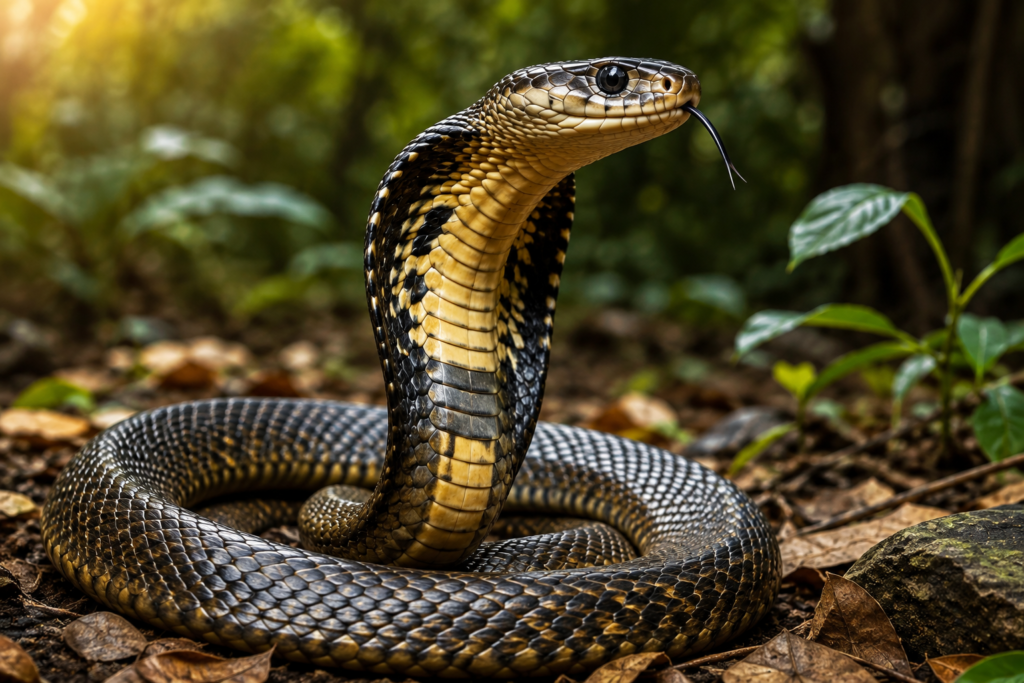
The snake is one of the most recognizable animals on Earth, yet it is also one of the most misunderstood. With a long, flexible body, no visible legs, and a remarkable ability to move through different environments, snakes have developed a reputation that ranges from mysterious and fascinating to frightening. In reality, snakes are highly specialized reptiles with important roles in ecosystems around the world.
From tiny species that can fit comfortably in a person’s hand to enormous constrictors capable of reaching several meters in length, snakes come in an extraordinary variety of forms. They live in deserts, forests, wetlands, grasslands, mountains, farms, and even urban environments. Some spend much of their lives in trees, while others are adapted to life underground or in water.
Understanding the snake means looking beyond myths and popular culture. These reptiles have evolved sophisticated hunting techniques, specialized senses, unusual methods of movement, and remarkable survival strategies. Whether you are interested in wildlife, biology, pets, or simply curious about the animal, learning how snakes actually live can make them much easier to appreciate.
What Is a Snake?
A snake is a legless reptile belonging to the suborder Serpentes. Snakes are vertebrate animals, meaning they have backbones, and they are members of the larger reptile group. Scientists recognize thousands of snake species, and new discoveries and taxonomic revisions continue to improve our understanding of their diversity.
Although snakes look very different from animals such as lizards, they share evolutionary relationships with them. In fact, snakes evolved from lizard-like ancestors. Over a very long period, their bodies became increasingly specialized for life without external limbs. Their elongated shape eventually became one of their defining characteristics.
The absence of legs does not mean that snakes are physically simple. Quite the opposite is true. Their skeletons, muscles, sensory systems, and digestive organs are adapted to their unusual body shape. A snake’s body may look straightforward from the outside, but internally it is an impressive example of evolutionary specialization.
The Evolutionary History of Snakes
The evolutionary history of the snake is a fascinating scientific subject. Fossil evidence suggests that snakes descended from ancient lizard-like reptiles. Exactly how and where the transition occurred remains an area of scientific study, but researchers have found evidence showing that early snakes had some features that connect them with their lizard relatives.
Some ancient snake fossils possessed small hind-limb structures, showing that the transition to a completely limbless body happened gradually. Modern snakes no longer have functional external legs, although remnants of hind limbs are still visible in certain groups, particularly boas and pythons.
The loss of limbs was not necessarily a disadvantage. A long, flexible body can move efficiently through narrow spaces, soil, vegetation, and water. Over millions of years, natural selection favored body designs that worked well in different environments. The result is the extraordinary range of snakes we see today.
Snake Anatomy and Body Structure
The snake’s body is designed around flexibility. Unlike humans and many other animals, snakes have extremely long bodies containing numerous vertebrae and ribs. This flexible skeleton allows them to bend, twist, and create waves of movement along their bodies.
Most snakes have a skull structure that allows their jaws to move in ways that seem unusual compared with mammals. Their lower jaw is not fused together at the front in the same way as a human jaw. This flexibility helps many snakes consume prey that is relatively large compared with the snake’s head.
Their internal anatomy is equally interesting. Because the body is narrow and elongated, many organs are arranged differently from those of mammals. Some organs are reduced, elongated, or positioned toward one side of the body. These adaptations allow important systems to function inside a very narrow frame.
How Snakes Move Without Legs
One of the most common questions about snakes is simple: how does a snake move if it has no legs?
The answer involves muscles, scales, ribs, and the interaction between the snake’s body and its environment. Snakes can use several different forms of locomotion depending on the surface and situation.
The most familiar method is lateral undulation. In this movement, the snake pushes sections of its body against irregularities in the ground, producing a series of waves that move from head to tail. The snake does not simply slide forward; it uses forces from the environment to propel itself.
Other methods include concertina movement, rectilinear movement, and sidewinding. Sidewinding is especially useful on loose sand because it reduces the amount of body surface in contact with the hot or unstable ground. Different species have different strengths, demonstrating how specialized snake locomotion can be.
How Snakes Hunt for Food
Snakes are predators, although their diets vary considerably between species. Depending on the snake, prey can include rodents, birds, eggs, frogs, fish, lizards, insects, and other animals.
Some snakes actively search for prey, while others rely heavily on ambush tactics. An ambush predator may remain motionless for long periods, waiting for an appropriate animal to come within striking distance. This strategy saves energy and can be particularly effective when prey is unpredictable.
A snake’s hunting method depends on its anatomy and habitat. Fast-moving snakes may actively pursue prey, while heavy-bodied constrictors often rely on surprise and strength. Venomous species may use venom to immobilize prey, allowing them to safely consume animals that might otherwise fight back.
How Snakes Eat Their Prey
Snakes cannot chew food in the same way humans do. Instead, most species swallow prey whole. Their flexible skulls and jaws allow them to handle meals that appear surprisingly large relative to the width of their heads.
The popular phrase that a snake “unhinges” its jaw is misleading. A snake does not simply dislocate its jaw like a broken joint. Instead, several skull and jaw structures allow controlled flexibility. The two sides of the lower jaw can move somewhat independently, helping the snake work its mouth around prey.
Once swallowed, digestion can take considerable time. A snake’s digestive system becomes highly active after feeding, and the animal may become less active while its body processes the meal. This energy-efficient lifestyle is one reason some snakes can go relatively long periods between meals.
Venomous and Nonvenomous Snakes
One of the most important distinctions people make when discussing snakes is whether a species is venomous or nonvenomous. Venomous snakes possess specialized systems for delivering venom, which they use primarily to subdue prey and, in some circumstances, defend themselves.
Venom works in different ways depending on the species. Some venoms primarily affect the nervous system, while others can damage tissues, interfere with blood clotting, or affect muscles and organs. The composition of venom is highly specialized and can vary significantly among snake groups.
Nonvenomous snakes can still be effective predators. Constrictors, for example, use muscular strength to restrain prey. Other species simply overpower or swallow relatively small animals. It is important not to assume that every snake is dangerous simply because it is a snake.
How Snake Venom Works
Snake venom is one of the most remarkable biological adaptations found in reptiles. It is not simply a single poison. Instead, venom is generally a complex mixture of proteins, peptides, enzymes, and other compounds that can have different effects on the victim.
The purpose of venom is primarily biological rather than malicious. A venomous snake uses it to capture prey efficiently and reduce the risk of injury during hunting. From the snake’s perspective, venom is an energy-saving tool that can make difficult prey easier to control.
Scientists have also studied snake venom for medical research. Components found in venom have helped researchers investigate blood clotting, cardiovascular processes, pain pathways, and other biological mechanisms. This demonstrates how something that evolved as a predatory adaptation can also provide valuable scientific information.
How Snakes Sense the World
Snakes do not experience their surroundings exactly as humans do. Their sensory systems are adapted to detecting prey, predators, temperature changes, movement, and chemical signals.
Smell is particularly important. Snakes use their tongues to collect chemical particles from the environment. When the tongue is pulled back into the mouth, those particles are transferred to a specialized sensory organ called the vomeronasal organ, commonly known as Jacobson’s organ.
This system helps snakes gather information about nearby animals and their surroundings. The famous tongue-flicking behavior is therefore much more than a strange habit. It is an important part of how snakes investigate the world.
Can Snakes Hear?
Snakes do not have external ears like humans, dogs, or birds. However, that does not mean they are completely deaf.
Instead, snakes detect vibrations through structures associated with their jaw and skull. Vibrations traveling through the ground can provide information about nearby movement. This is particularly useful for an animal that spends time close to the ground.
Snakes are generally much better at detecting vibrations and certain airborne sounds through their bodies than at hearing sounds in the same way humans do. Their sensory system is therefore closely connected to their lifestyle and environment.
Snake Vision
Snake eyesight varies dramatically between species. Some snakes have relatively strong vision, while others have eyes adapted to particular lifestyles.
Arboreal snakes that hunt in daylight often rely heavily on vision. Species living underground may have more limited visual abilities. Some snakes also possess specialized visual adaptations that help them detect movement.
Certain groups, particularly some pit vipers, boas, and pythons, have heat-sensitive pit organs. These structures allow them to detect infrared radiation associated with warm objects. For a predator hunting warm-blooded prey, this can provide valuable information even when visibility is poor.
Why Snakes Shed Their Skin
A snake’s skin does not grow in the same flexible way human skin does. As the snake grows, its outer skin eventually becomes too tight, so the animal must shed it.
This process is called ecdysis. Before shedding, a snake may become less active and its eyes can appear cloudy because of changes in the outer skin layer. Eventually, the snake loosens the old skin and works its way out of it.
Shedding is a normal and essential part of snake growth. Young snakes may shed more frequently because they grow quickly, while adult snakes often shed less frequently. Environmental conditions, health, age, species, and food availability can all influence shedding patterns.
Where Snakes Live
Snakes are remarkably adaptable animals. They inhabit almost every major type of terrestrial environment where conditions allow them to survive.
They can be found in tropical rainforests, deserts, grasslands, wetlands, mountains, agricultural areas, forests, and coastal regions. Some species spend most of their lives in trees, while others are specialized for burrowing.
Aquatic snakes provide another example of adaptation. Certain species spend much of their time in rivers, lakes, marshes, or coastal waters. Their body shapes and behaviors allow them to hunt in environments that would be challenging for many land-dwelling reptiles.
Snakes in Deserts
Deserts may appear too harsh for many animals, but numerous snake species are well adapted to life in dry environments.
Desert snakes must cope with high temperatures, limited water, and scarce food. Many are most active during cooler periods of the day, such as early morning, evening, or nighttime. This helps them avoid overheating.
Sidewinding is another fascinating adaptation seen in certain desert snakes. By lifting parts of the body and moving sideways across loose sand, these snakes can travel efficiently while minimizing contact with the hot surface.
Snakes in Forests
Forests provide snakes with abundant shelter and food. Fallen logs, leaf litter, tree roots, rocks, and vegetation can all provide hiding places.
Tree-dwelling snakes have developed particularly interesting adaptations. Some have slender bodies that allow them to move through branches and foliage. Others have tails that help them grip surfaces and maintain balance.
Forest ecosystems also provide diverse prey. Depending on the species, snakes may feed on rodents, birds, frogs, lizards, insects, eggs, or other reptiles. Their presence can help regulate populations of these animals.
Snakes in Water
Some snakes are highly adapted to aquatic environments. Water snakes may hunt fish, amphibians, and other aquatic animals while spending significant amounts of time swimming.
Marine snakes are even more specialized. Sea snakes and related groups have evolved body shapes and physiological adaptations that allow them to live in marine environments.
Aquatic snakes often have behaviors that make them efficient swimmers. Their elongated bodies allow them to generate waves through the water, much like their terrestrial relatives generate movement across land.
The Largest Snakes in the World
When people think about enormous snakes, anacondas, pythons, and boas usually come to mind. Several species can reach impressive lengths and weights.
The green anaconda is particularly famous for its massive body. It lives in South America and is strongly associated with rivers, swamps, and other wet environments. Reticulated pythons are among the longest snakes known and can reach extraordinary lengths.
Large size provides advantages, including the ability to overpower substantial prey. However, it also comes with costs. A large snake requires more energy, and its size can limit the environments in which it can move comfortably.
The Smallest Snakes
Not every snake is large or intimidating. Some species are tiny and can be surprisingly delicate.
Small snakes often specialize in eating insects, larvae, tiny vertebrates, or other small prey. Their bodies allow them to enter narrow spaces that larger predators cannot reach.
The existence of extremely small snakes highlights the incredible diversity of the group. Snakes are not defined by one body size or lifestyle. Instead, evolution has produced species ranging from tiny burrowing animals to enormous aquatic and terrestrial predators.
How Snakes Reproduce
Snake reproduction varies among species, but many snakes reproduce through internal fertilization.
Some species lay eggs, while others give birth to live young. There are also species in which eggs develop inside the female’s body and hatch internally or shortly before birth.
Reproductive strategies are closely linked to environmental conditions. Egg-laying can be effective where suitable nesting sites and temperatures are available, while live-bearing may provide advantages in colder or more unpredictable environments.
Snake Eggs and Nesting
Egg-laying snakes need suitable locations for their offspring to develop. Depending on the species, eggs may be placed in soil, leaf litter, decaying vegetation, burrows, or other protected locations.
Some snake species show parental care, although this behavior is not universal. Certain pythons are known for remaining with their eggs and using muscular activity to influence incubation conditions.
For many species, however, young snakes become independent shortly after hatching. They must immediately begin finding shelter, avoiding predators, and locating food.
Baby Snakes and Their Survival
Baby snakes face many dangers. They may be small enough to become prey for birds, mammals, larger reptiles, amphibians, and even other snakes.
Young snakes generally have to rely on their instincts from the beginning. Unlike mammals that may remain dependent on parents for extended periods, many newly hatched or newborn snakes must survive largely on their own.
Their survival depends on finding suitable shelter, obtaining food, avoiding predators, and maintaining appropriate body temperature. The challenges faced during early life help explain why many snakes produce multiple offspring.
What Do Snakes Eat?
Snake diets vary greatly. Some specialize in particular prey, while others are generalists that consume whatever suitable food is available.
Common snake prey includes rodents, birds, eggs, frogs, fish, lizards, insects, and other small animals. Some large snakes can consume surprisingly large prey, while tiny species may depend almost entirely on insects or small invertebrates.
Diet is strongly influenced by habitat. A snake living near water may specialize in fish or amphibians, while a desert species may depend on rodents and lizards. Food availability is therefore closely connected to where each species can survive.
Snakes and the Food Chain
Snakes occupy important positions in food webs. They can function as both predators and prey, linking different parts of an ecosystem.
As predators, snakes help control populations of rodents, insects, amphibians, reptiles, and other animals. This can have indirect effects throughout an ecosystem.
At the same time, snakes provide food for larger predators. Birds of prey, mammals, reptiles, and other animals may hunt snakes. This makes snakes important participants in the flow of energy through ecosystems.
Why Snakes Matter to Humans
Many people see snakes only as frightening animals, but they provide several ecological benefits.
One of the most obvious is rodent control. Snakes that eat rats and mice can help regulate populations of animals that may damage crops, contaminate food, or spread disease.
Snakes also contribute to biodiversity. Every species plays a role in its ecosystem, and removing predators can sometimes produce unexpected consequences. A healthy ecosystem generally depends on complex relationships between many different organisms.
Common Myths About Snakes
Snakes are surrounded by myths. One common misconception is that snakes are constantly looking for opportunities to attack people. In reality, most snakes prefer to avoid humans when possible.
Another myth is that all snakes are slimy. Snakes have dry scales, although their skin may feel smooth or textured depending on the species.
There is also a widespread belief that snakes chase humans deliberately. While a snake may move quickly toward cover or, in some situations, behave defensively, this is not the same as deliberately hunting a person.
Understanding these misconceptions can make encounters with snakes less frightening and more predictable.
Why Snakes Sometimes Enter Homes
Snakes may occasionally enter houses, garages, sheds, or other structures when they are searching for food, water, shelter, or suitable temperatures.
A building can unintentionally provide attractive conditions. Rodents around a property may attract snakes, while piles of materials, vegetation, gaps, and sheltered spaces can provide hiding places.
The best approach is usually prevention rather than confrontation. Keeping buildings maintained, reducing rodent attractants, clearing unnecessary debris, and sealing potential entry points can reduce the likelihood of unwanted encounters.
How to Behave Around a Wild Snake
If you encounter a snake outdoors, the safest general response is to give it space. Most snakes are not interested in interacting with people.
Avoid trying to catch, touch, corner, or provoke the animal. A snake that feels threatened may defend itself, even if it would normally prefer to escape.
Keeping children and pets away is also sensible. If a snake is inside a building and you are uncertain about its species or safety, contacting a qualified local wildlife professional can be a better choice than attempting to handle it yourself.
Snakes as Pets
Some snake species are commonly kept as pets, including certain corn snakes, ball pythons, kingsnakes, and other captive-bred species.
A pet snake requires specialized care. Appropriate housing, temperature gradients, humidity, food, clean water, secure enclosure design, and veterinary support all matter.
Potential owners should research the exact needs of a species before obtaining one. A snake may require less daily interaction than a dog, but that does not mean it requires little care. Responsible ownership begins with understanding the animal’s natural biology.
How Long Do Snakes Live?
Snake lifespan varies significantly between species and circumstances.
In the wild, snakes face predators, disease, food shortages, habitat loss, environmental changes, and other challenges. Captive snakes may sometimes live longer because they have consistent food, controlled environmental conditions, and protection from predators.
Some species can live for many years, and certain individuals have survived for decades under appropriate care. Lifespan therefore depends on species, genetics, health, environment, and access to resources.
Snake Conservation
Many snake species face conservation challenges. Habitat destruction is one of the most important threats because snakes depend on specific environments for shelter, reproduction, and food.
Road mortality can also affect populations, especially in areas where snakes move between habitats. Pollution, persecution, illegal collection, invasive species, and changes in prey populations can create additional pressure.
Conservation is not only about protecting famous large animals. Small and lesser-known snake species can also be important parts of ecosystems and may require specialized conservation strategies.
Snakes and Climate Change
Climate change may affect snakes in several ways. Because snakes are ectothermic, their body temperatures are strongly influenced by environmental conditions.
Changes in temperature can affect activity patterns, reproduction, digestion, prey availability, and habitat suitability. Extreme weather events can also alter ecosystems where snakes live.
Some species may adapt or shift their geographic ranges, while others may struggle if suitable habitat disappears. Understanding these changes requires long-term ecological research because different snake species respond differently to environmental conditions.
Why People Fear Snakes
Fear of snakes is widespread, and there are several possible reasons for it. Some snakes are genuinely dangerous, so caution around unfamiliar species has obvious survival value.
Culture also plays a major role. Stories, movies, folklore, and media often portray snakes as symbols of danger or evil. Dramatic portrayals can reinforce fear even when they do not accurately represent normal snake behavior.
Learning about snakes can reduce unnecessary fear. When people understand how snakes behave, why they move, and what they are trying to accomplish, these animals can seem less mysterious.
The Cultural Importance of Snakes
Snakes have appeared in human cultures for thousands of years. They have been represented as symbols of healing, transformation, danger, fertility, wisdom, protection, and rebirth.
Part of this symbolism comes from the snake’s unusual biology. Shedding its skin may have inspired associations with renewal and transformation. Its ability to disappear into holes and emerge later may also have contributed to stories about mystery and the underworld.
Different societies have interpreted snakes in very different ways. In some traditions they are respected or worshipped, while in others they are associated primarily with danger. This cultural diversity makes the snake fascinating beyond biology alone.
Why Snakes Continue to Fascinate Us
There is something naturally intriguing about an animal that can move without legs, swallow prey whole, shed its skin, and survive in environments ranging from deserts to forests.
Snakes also challenge human expectations. We tend to understand animals by comparing them with familiar species, but snakes operate according to a very different body plan.
Their combination of unusual anatomy, specialized senses, hunting strategies, and evolutionary history makes them valuable subjects for scientific research and education. They remind us that nature can solve survival problems in many different ways.
Conclusion
The snake is far more than a symbol of fear or a creature found in frightening stories. It is a diverse and highly adapted group of reptiles that has survived and evolved across an enormous range of environments. From the tiny species hiding beneath soil and leaf litter to giant constrictors moving through tropical waterways, snakes demonstrate how evolution can produce extraordinary solutions to life’s challenges. Their flexible skeletons, specialized senses, unique movement, varied diets, and reproductive strategies all contribute to their success. Learning about snakes also encourages a more balanced relationship with wildlife. Not every snake is dangerous, and most would rather avoid unnecessary contact with humans. At the same time, wild animals should always be treated with respect and caution.
YOU MAY HAVE MISSED
snake